Doubles and Triples Endorsement Study Guide
A practical doubles and triples CDL guide covering converter dollies, coupling, trailer tracking, sway, inspection, turns, backing and endorsement preparation.
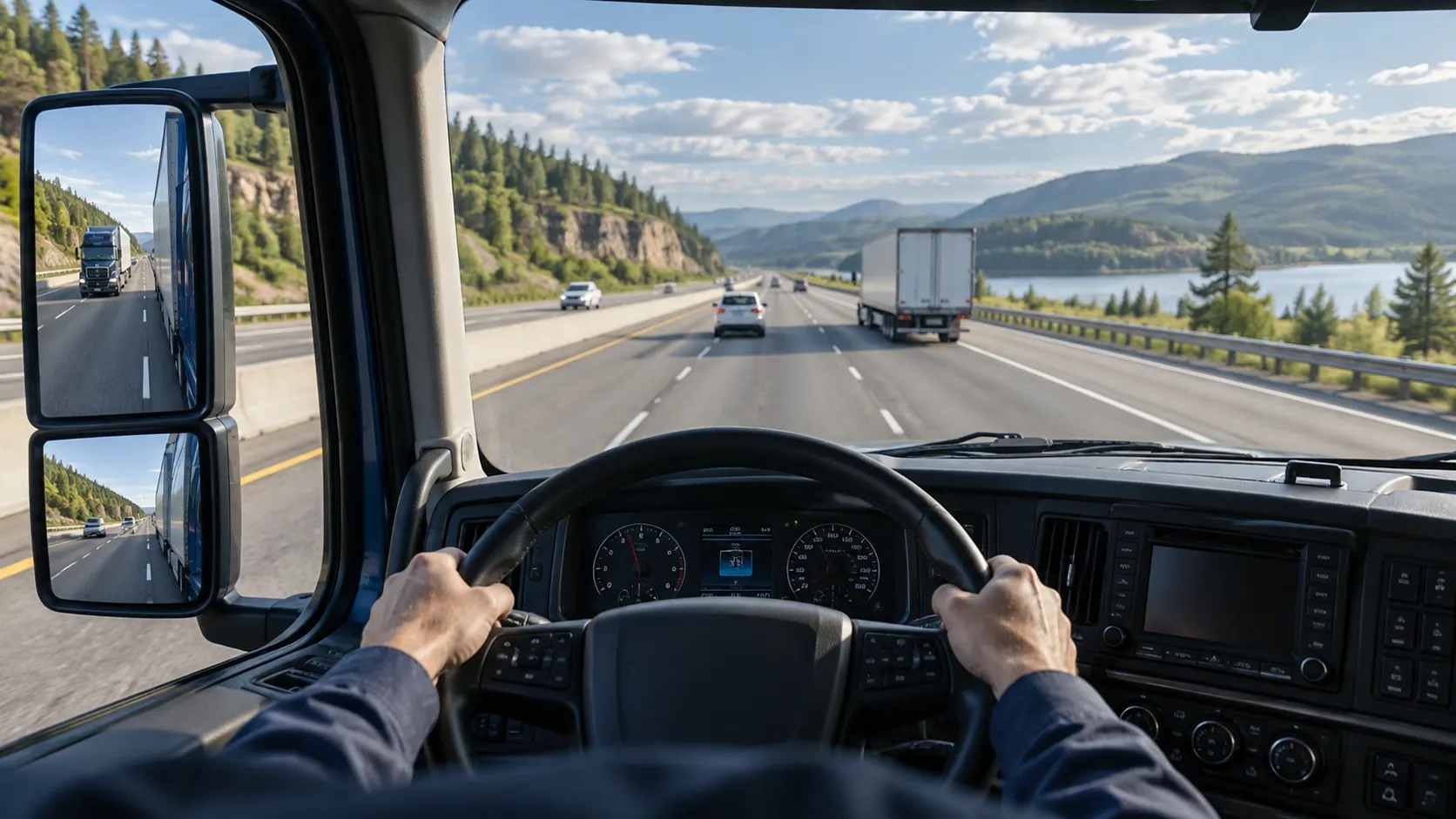
What the doubles and triples endorsement covers
The doubles and triples endorsement is connected to operating a combination with multiple trailers or a configuration that uses more than one trailer unit. These combinations respond differently from a single trailer. Each connection adds another point that can move, fail, swing or react late, so the driver must understand the entire system rather than focusing only on the first trailer.
The role of the converter dolly
A converter dolly connects one trailer to another and includes its own frame, axle, wheels, coupling components and safety connections. Study how the dolly attaches, how the pintle hook or other connection is secured and how the air and electrical lines are routed. A missing lock, damaged connection or loose line can create a serious separation or braking hazard.
Coupling multiple trailers safely
Follow the exact coupling sequence for the equipment. Position the units carefully, secure the coupling device, connect air and electrical lines, raise or lower landing gear as required and complete a visual inspection from both sides. Verify that the trailers are supported, the lines are not pinched and the connection is locked before pulling. Never assume the first coupling sound proves the system is secure.
How multiple trailers track in a turn
The rear trailer generally follows a different and shorter path than the tractor and first trailer. The farther back the trailer, the more its path can differ from the front of the combination. Approach turns slowly, watch both sides, allow enough room and avoid cutting the corner. A turn that looks clear at the tractor can still place the rear trailer into a curb, object or pedestrian area.
Trailer swing and rollover risk
Sudden steering, hard braking, excessive speed and abrupt lane changes can create dangerous movement throughout the combination. A rear trailer can swing or react after the tractor has already changed direction. Reduce speed before a curve, keep steering smooth and leave room for the entire vehicle to settle before accelerating.
Lane changes and mirror management
Multiple trailers create larger blind areas and make lane changes take longer. Signal early, check mirrors repeatedly, monitor the rear trailer and do not move until the full combination has enough space. Avoid relying on one mirror view because the trailer position and angle can hide smaller vehicles.
Stopping and braking a multi-trailer combination
The combined weight and length increase stopping distance. Braking can also affect the trailers differently, especially when the road is wet, slippery or uneven. Maintain a large following gap, brake early and smoothly and avoid aggressive steering while braking. Follow the equipment and handbook instructions for brake use and traction conditions.
Backing doubles and triples
Backing multiple trailers is more complex because the steering correction travels through several connections. Set up as straight as possible, use small steering movements, watch each trailer and stop before the combination develops an unsafe angle. Use a trained spotter when permitted, establish clear signals and stop immediately if communication is lost.
Inspection topics to study
Inspect the tractor, first trailer, converter dolly and rear trailer as applicable. Check coupling devices, locking mechanisms, air lines, electrical cables, landing gear, frames, suspension, tires, wheels, lights, doors and cargo securement. Practice explaining what is secure, what is damaged and what would make the vehicle unsafe.
Cargo and weight distribution
Cargo must be secured and distributed so that the combination remains stable and within the applicable limits. Uneven or shifting cargo can make trailer sway and braking problems worse. Follow loading instructions and never assume that the trailer is safe because the doors are closed.
How to study for the endorsement test
Begin with the connection diagram and learn each component’s purpose. Then review coupling, inspection, turning, sway, braking and backing. Use practice questions that ask what a driver should do next, not only questions that ask for a part name. Finish with supervised practice in the same configuration used for training or testing.
Common doubles and triples mistakes
Applicants often forget the converter dolly, inspect only the first trailer, turn too quickly, cut corners, back without stopping, rely on one mirror or assume a spotter removes driver responsibility. Record each mistake and repeat the full coupling or maneuver sequence after correction.
Frequently Asked Questions
Are doubles and triples harder to back?
They require more planning because each trailer responds differently and steering corrections travel through multiple connections.
Is the endorsement needed for every multi-trailer job?
Confirm the requirement for the vehicle configuration, cargo and jurisdiction before operating.
What is a converter dolly?
It is a device used to connect one trailer to another and includes its own coupling, axle and safety components.
Why do rear trailers track differently?
Each connection introduces another pivot, so the rear trailer can take a shorter or different path from the tractor.
Can a spotter make multi-trailer backing safe automatically?
No. The spotter can assist, but the driver remains responsible for observation, communication and stopping.
What should be inspected on a double or triple combination?
Inspect every tractor, trailer and dolly connection plus air, electrical, wheels, tires, suspension, lights, doors and cargo as applicable.
Ready for the next step?
Continue with CDL exam preparation
Open the CDL exam preparation hub and continue from the right starting point.
Featured CDL School
Example of the premium school listing shown on this page.
Your CDL School Name
Promote your commercial driver training school to students reading this CDL guide.
Reserve this space for your CDL school.