Commercial Driver Safe-Driving Habits to Build Before Test Day
Build the defensive-driving habits that support CDL test performance and long-term commercial driving safety in traffic, weather and difficult road conditions.
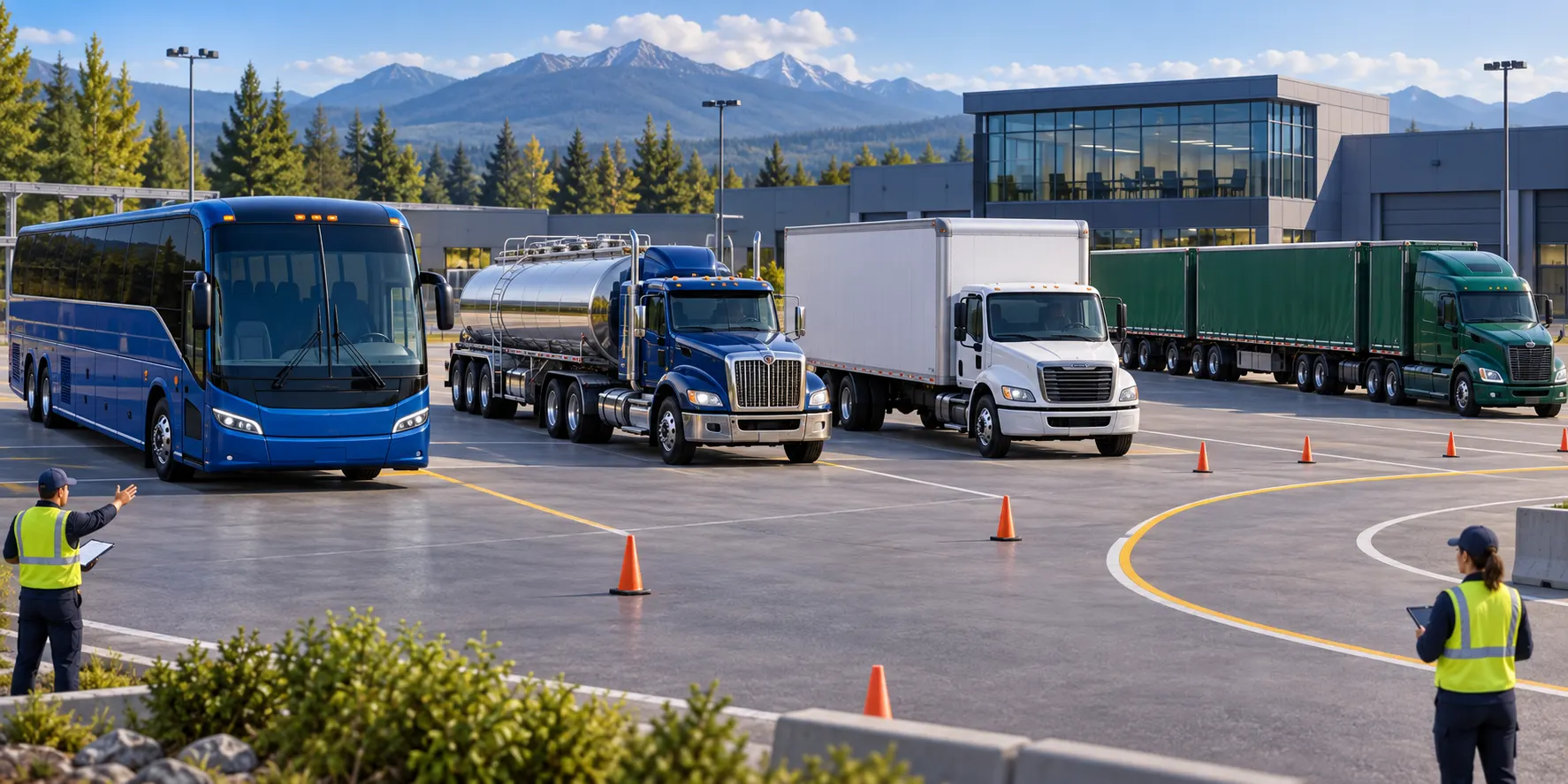
Scan farther ahead than a passenger driver
A commercial vehicle needs more time and space to slow or change direction. Look beyond the vehicle directly ahead and identify traffic lights, lane closures, stopped traffic, pedestrians, road-surface changes and escape space early. A longer visual lead gives you options and reduces the need for sudden braking.
Protect a safe following distance
Following too closely removes the time needed to see, decide and react. Heavy vehicles also need more room to stop, especially when loaded, downhill or on wet pavement. Use a consistent spacing method, increase the gap in poor conditions and create more room when another driver merges in front of you.
Use mirrors as a continuous scan
Mirrors are not a single pre-lane-change action. Check them regularly for traffic, trailer position, cyclists, pedestrians and developing hazards. Learn what each mirror can and cannot show and move your eyes back to the road ahead after every scan. If you are unsure whether a space is clear, slow down and verify.
Manage speed before the hazard
Safe speed is not only the posted limit. It depends on vehicle weight, road surface, visibility, traffic, curves, grades and available stopping distance. Reduce speed before entering a curve, work zone or downgrade while the vehicle is stable. Waiting until the hazard is beside you can leave too little room to respond.
Keep steering and braking smooth
Abrupt inputs can destabilize a tall or loaded vehicle, shift cargo, increase rollover risk or cause a trailer to swing. Brake early, steer gradually and accelerate smoothly. If an emergency requires hard braking, keep the vehicle controlled and follow the approved technique for the equipment rather than making a sudden panic maneuver.
Plan for blind spots and vulnerable road users
Commercial vehicles have areas that cannot be seen directly from the driver’s seat. Assume that a passenger car, motorcycle, bicycle or pedestrian may be hidden until you verify the space. Signal early, check mirrors more than once, avoid squeezing beside vulnerable road users and give them time to clear the vehicle’s path.
Prepare for weather and surface changes
Rain, snow, ice, strong wind, fog, darkness and standing water can reduce traction and visibility. Slow down, increase following distance, use the equipment required by the conditions and avoid sudden steering or braking. If conditions become unsafe, communicate with dispatch and stop in a safe location when permitted.
Control fatigue and distraction
Fatigue can reduce reaction time and judgment before a driver recognizes the problem. Follow required rest and hours-of-service rules, plan breaks, recognize warning signs and never use a phone while driving. A missed turn or delivery deadline is not a reason to continue when attention is failing.
Secure the vehicle before moving
Before departure, confirm that doors, cargo, mirrors, lights, coupling equipment and required safety systems are secure. Recheck after loading, at fuel stops and whenever something changes. A walk-around is faster than dealing with a loose door, shifted cargo or failed connection on the road.
Communicate early with other drivers
Signals, lane position, brake lights and predictable speed help other road users understand a commercial vehicle’s plan. Signal before the maneuver, keep the signal active long enough to be understood and do not assume another driver will yield simply because you signaled.
Use a defensive-driving decision sequence
When a hazard appears, scan, reduce speed, create space, communicate and choose the safest escape path. Avoid locking into one plan when traffic changes. This sequence supports both test questions and real driving because it prioritizes time, space and control.
Build a daily safety habit
Before every trip, review route, weather, cargo, vehicle condition, rest status and likely hazards. After the trip, report defects, incidents and near misses according to company procedure. Safe driving becomes reliable when it is part of the routine rather than a reaction to a close call.
Frequently Asked Questions
Is defensive driving only for the road test?
No. It is a daily operating habit that reduces risk throughout a commercial driving career.
What is one habit to start today?
Practice a continuous scan of mirrors, road ahead, sides, following distance and escape options.
Why do commercial vehicles need more following distance?
Their size, weight and braking behavior require more time and space to stop safely.
What should you do when another driver cuts in front?
Reduce speed smoothly, rebuild a safe following distance and avoid aggressive reactions.
How does fatigue affect commercial driving?
It can reduce attention, reaction time and judgment. Follow rest and hours-of-service requirements and stop when unsafe.
Should safe speed always equal the posted limit?
No. Conditions, vehicle weight, visibility, traffic and road design can require a lower safe speed.
Ready for the next step?
Continue with CDL exam preparation
Open the CDL exam preparation hub and continue from the right starting point.
Featured CDL School
Example of the premium school listing shown on this page.
Your CDL School Name
Promote your commercial driver training school to students reading this CDL guide.
Reserve this space for your CDL school.